


This is humbling. I’ve always thought “Community Guideline” posts were dumb, and now I’m writing my own.
In my previous article, “Are Ignorant Protestants Going to Hell?”, we discussed how the moral law applies to Christians outside the Church. Naturally, some people thought it was great, and others were offended. So, a few housekeeping things are in order before we continue with the series. The next article in the series is “Are Protestant Blasphemers Going to Hell?”, and I’m confident it will resonate in a similar way with readers.
So, before I publish the piece on blasphemy, I want to reiterate some principles of online etiquette, because there was some behavior by some subscribers that was not professional, and I had to remove their comments. Second, I want to reiterate the purpose and mission of Pious Reflections.

Guidelines
Basic courtesy for Pious Reflections subscribers
Leave comments, not sermons.
Seek clarity.
Don’t be afraid to offer criticism
1. Leave comments, not sermons
First, the comments section is not a place for you to preach sermons. Think of the comments section like a speaking event with Q&A afterwards. If the questioner at the mic goes too long, the organizers of the event will mute their mic. There is a similar principle here. If your comment is getting longer than a single-spaced page, then I would recommend you write your own article in response to mine. Then we will at least benefit from the internet traffic our “back-and-forth” will generate.😇
2. Seek clarity
Second, if I write something that offends you or makes you confused, have the courage to leave a comment engaging with the content or email a clarifying question. The beauty of the internet is that we can always ask the question, “What did you mean by that?” How many of us would like to ask St. Paul or Jesus the same question?
If a comment is not your style, feel free to contact me privately through the medium of your choice. All I ask is that you not presume the most offensive interpretation is the most likely interpretation. If you find yourself bitter or angry about something I’ve written or produced, then use these buttons 👇 to leave your thoughts so we can get on the same page.
3. Criticisms are welcomed
Long posts are not great, again, if you’re approaching a page-long response, use your own Substack to respond, but that doesn’t mean criticisms that are to the point are not welcomed. For example, saying, “I disagree with your argument on Ignorant Protestants, because in Romans, Paul says, everyone who confesses with their mouth that Jesus is Lord will be saved. What would you say to that?” Is fair game. Comments help creators get more engagement, so while you’re more than welcome to send emails and texts asking questions, if you want to help the publication, comments are the best way to do that. It essentially tells the algorithm, “Hey, this guy has a piece that people are engaging with, give it to more people.” So, insult me in the comments. Here, give it a shot!
The Mission
In a nutshell, my mission in life is to see more people become Catholic, while at the same time becoming the oldest StarCraft II player to win a world championship. Ok, that last part isn’t real, but if you’re into SCII, leave a comment.
I’m a Catholic. That means that I believe most protestant beliefs are heretical. That doesn’t mean that Protestants have nothing to offer, that they don’t do some things better than Catholics (e.g., study the Bible), or that God does not give them grace and unique encounters with Him that cannot be replicated anywhere else.
I’ve said repeatedly that I am a better Catholic because of my Protestant mentors and discipleship. Protestants have done great things for “Mere Christianity,” but their foundational premises have led to some significant moral failures in the name of anti-Catholic Christianity. Catholics have done great sins too, but their teachings have not endorsed these things. For example, the Catholic Church has never institutionally exhorted its members to fight for a woman’s right to abortion as the SBC did in the 1970s. See my article “How Sola Scriptura Blinds the Faithful” for more historical facts on this matter.

Entering into the fullness of the Church and receiving the sacraments has radically changed my life. Many friends have said, “You’ve changed for the better since becoming Catholic.” But some would like to believe that this was merely a psychological change, not a spiritual one.
Sometimes I feel like I should stop writing and producing content and just keep my faith to myself, but then I experience God’s love so profoundly in the sacraments, I end up finding myself back at my laptop researching and writing another piece. I feel like Jeremiah, when he said,
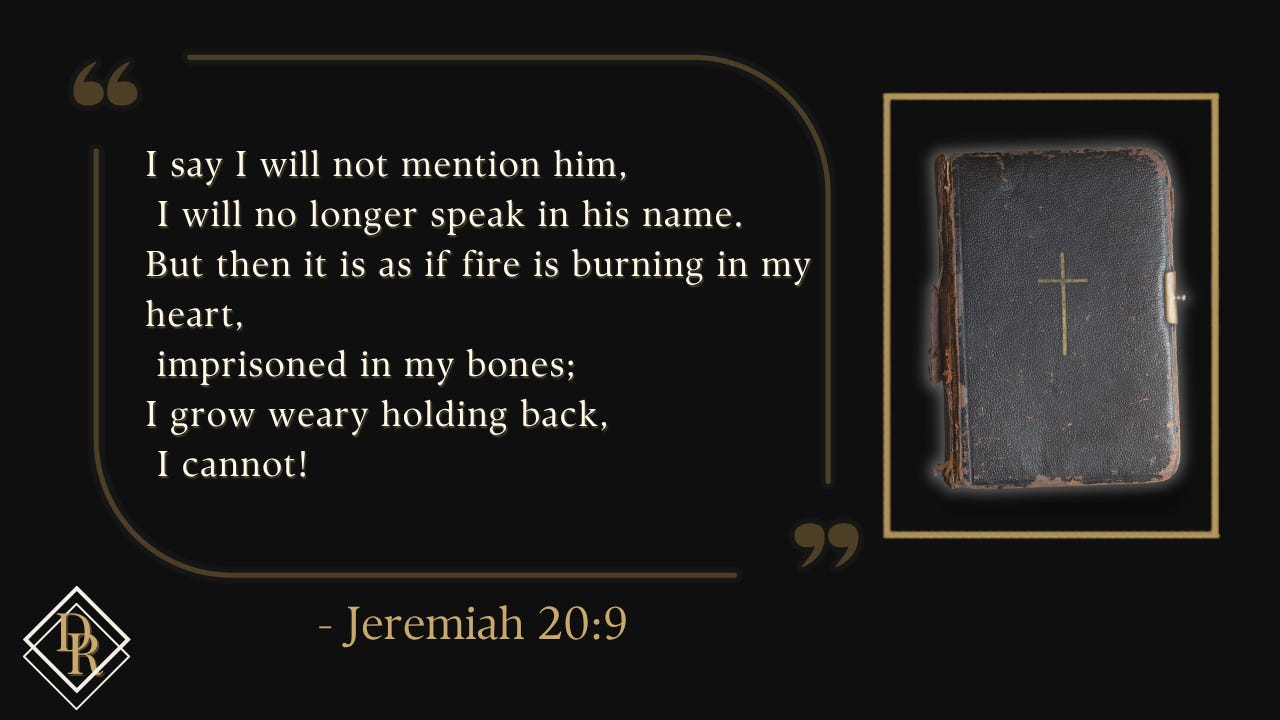
I want to share the Faith with anyone willing to read or listen to my content. I want my readers and listeners to experience God the way He intended them to, which is through the sacraments, Baptism, Confession, Confirmation, and the Eucharist through the Holy Sacrifice of the Mass. This is evangelism, and the Church exhorts all the faithful to do this,
“Although in ways known to himself God can lead those who, through no fault of their own, are ignorant of the Gospel, to that faith without which it is impossible to please him, the Church still has an obligation and also the sacred right to evangelize all men.”
— Ad Gentes (AG), 7.
Sometimes I get questions that make me wonder if people believe that I’m really Catholic. One of these questions was something along the lines of, “Why are you writing this series on Protestants and Hell? What are you hoping to accomplish?”
The short answer is because I believe that the Church is required for salvation, and that it is my Christian duty to evangelize people into His Church. What I hope to accomplish is that more people would recognize the errors of Protestantism and become Catholic, not because I want to win an argument, but because of the profound experience of encountering Christ in the Eucharist. For a Protestant to encounter Christ in the Eucharist, especially one well versed in the scriptures, is like Ezekiel when he ate the scroll.
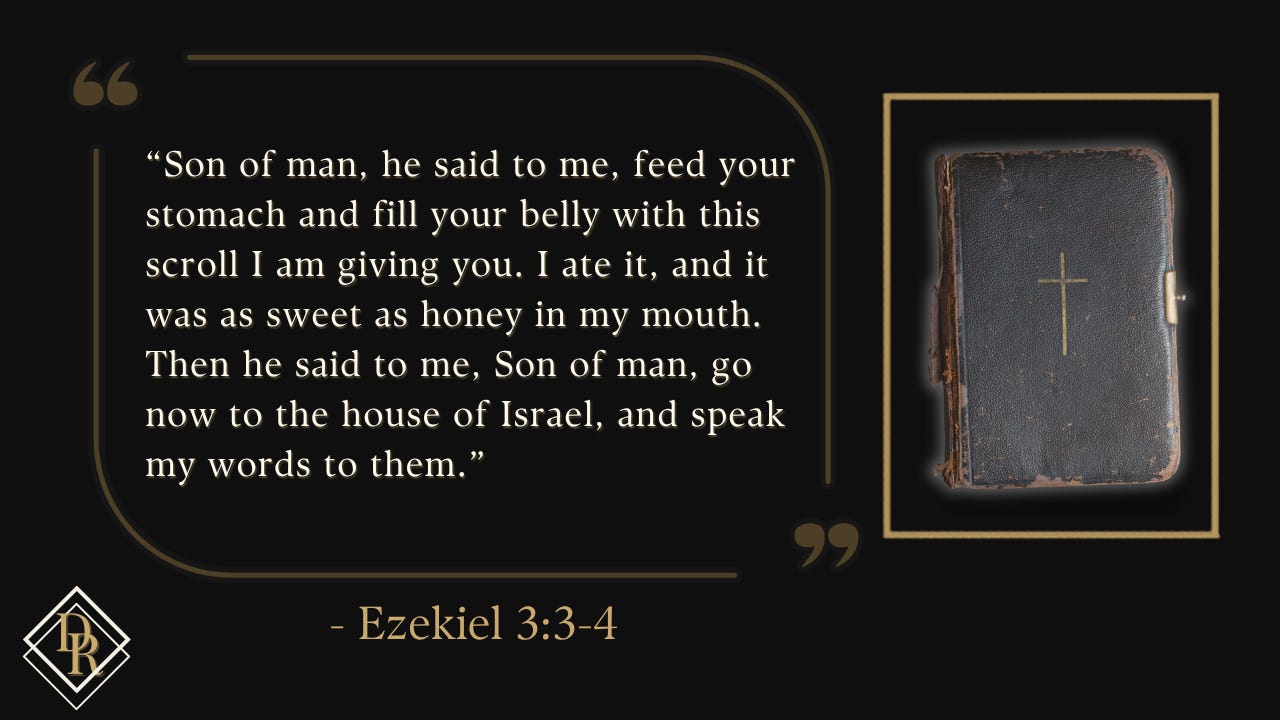
The Eucharist is the fulfillment of the Old Covenant, but it is also the fulfillment of a Protestant’s desire to be united to the Word. God’s Word never fails, and we can be united to it intellectually and spiritually through study, but you cannot experience it physically the way that God intended you to without the Mass. It is here that man finds his salvation resting on the altar and presented to his lips like the hot coal that was pressed to the unclean lips of Isaiah. Jesus’ words in John six are the fulfillment of Ezekiel and Isaiah when He said,
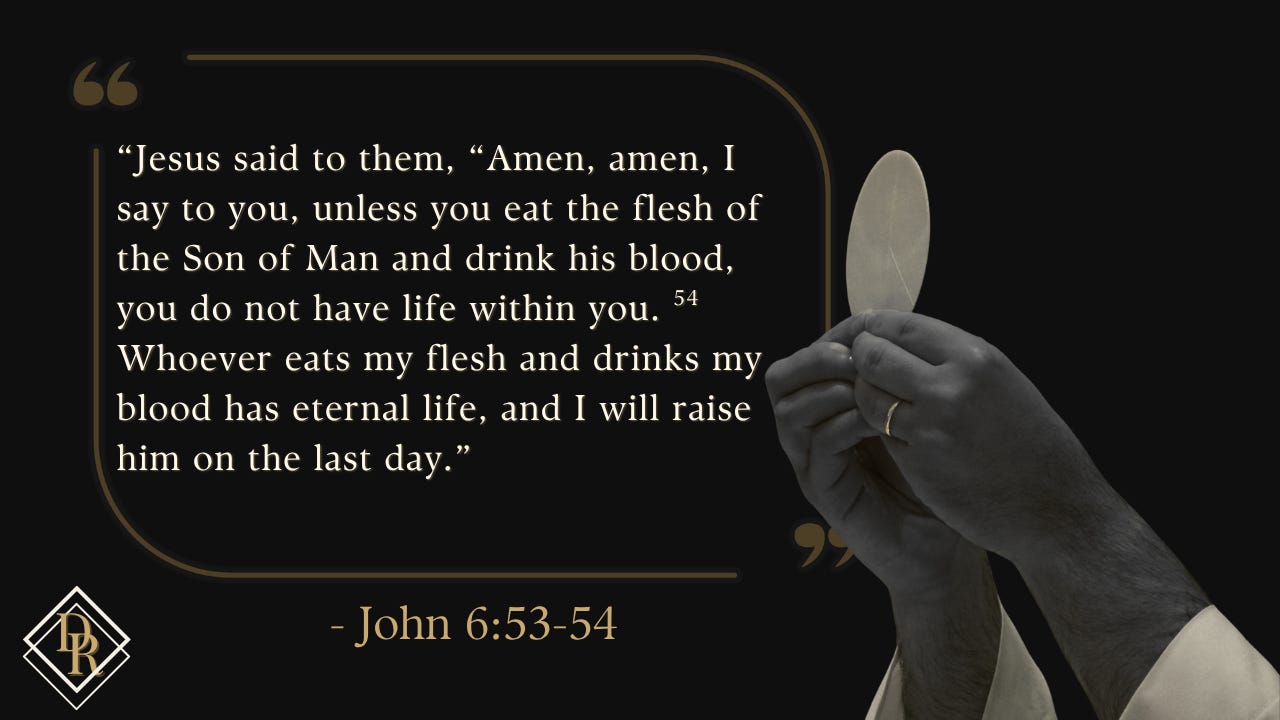
Of course, God can make exceptions, as we see with the thief on the cross, but exceptions are not rules for life. If the thief on the Cross was the primary way that one was supposed to enter paradise, then part of the conversion experience in the early Church would have been a prayer to be remembered before they died, followed by a liturgically assisted suicide.
Finally, I hope that you will continue to enjoy the content that I write and produce. My goal with each piece of content is for you…
To be more faithful.
To be more hopeful.
To be more loving.
I have often prayed since starting this content, “Lord, give me the adventure, but only if you go with me.” I believe God’s taking me somewhere with this whole endeavor, and I hope you’ll come along for the ride.
— DR