


Most people thought that COVID was their major generational challenge. It was not.
The future is here, and it’s insane!
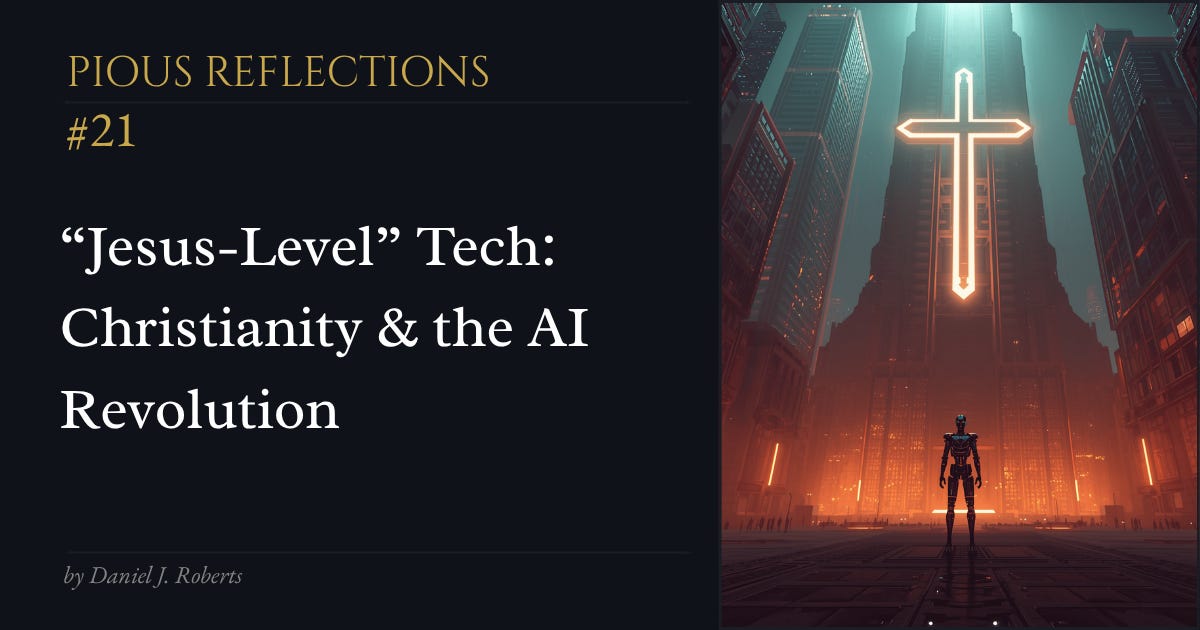
But the future may not be here for you…yet. If you’re not in computer software or robotics, you probably don’t realize that there are major movements happening in the technology space that are going to drastically shift our economy, politics, morality, and religion. That’s why most people are downplaying the technological revolution we are now living through.
My day job is writing code, or at least it used to be. At the end of 2025, AI seemed like it had flatlined in its capabilities. Then I received a LinkedIn article about how AI had made a major improvement in coding, and I decided to give it another shot. The results were unreal.
The work I was doing was immediately enhanced. Gaps in my knowledge were immediately filled, my rate of code production was higher than ever, and developing a solution for technological problems was a breeze. If social media notifications are a dopamine drip, then this was a dopamine fire hose. But as with all the highs, there was a major crash.
The crash came when I realized that I was not actually producing anything with my skills, but with prompts and knowledge. It became clear that before AI, I was the driver and the computer was the car. Now, AI was the driver, and I was just a passenger. Technology had gotten to the point where our experience with it was going to be just like Google Maps. I know where I need to go, but I can’t remember how to get there. Good thing I have my Google Maps, or else I’d be in an interesting situation.
Of course, optimists will object, “But you still have the knowledge that makes the AI build what you need.” Which was convincing for a while, until you realize that we are quickly moving towards something called Recursive-Self-Improvement (RSI), which is just a fancy word for saying, “Technology that improves itself,” not technology that merely fixes or maintains itself. We are closer to this than you think. Watch:
This will not replace all jobs, but it will significantly reduce the number of jobs that are needed in a given industry. AI optimists will say that we are going to have more work to do than we can fulfill. Which means that for most people, definitely not all, you are either going to be without a job or we are going to have to take a job where you’re worked to the bone. Neither option is particularly great.
Similar promises were made about the computer. You’ll have a four-day work week because so much is going to get done. But, of course, computers did create more work for us to do, in fact, more than we could handle. So, we ended up going remote, and now we are at our company’s beckon call 24/7. When they no longer need you, they just send you an email and lock you out of the system.
The obvious difference between the computers that promised a 4-day work week is that the computers were not coding or manufacturing themselves. RSI was only in movies, and the process to attain it had already worked itself out in the fictional world playing on the screen.
AI is just one piece of the technological revolution. In reality, there is nothing that this technology will not touch. The creators of these technologies now possess the most empowering technology the world has ever seen. And given their deep love of God and exceptional virtues, we can rest easy knowing that our technology overlords are going to wield this technology for God and the common good. But then again, there is that whole, “Power corrupts, absolute power corrupts absolutely.” Moving on.
The New Priesthood
The main question that always comes up with any major technological shift is, “What does it mean to be human?” This is born out of the experience of technology taking away something perceived as essential to the human experience. When you spend 8 hours a day laying railroad and getting compliments from your co-workers, only to be outdone by a mechanical version of your job, you begin to question your purpose in life.
Pope Leo XVI’s forthcoming encyclical will most likely address this and other questions like it. He wrote the following post on X this morning:
“As evidenced by the unbridled promotion and implementation of technology at the expense of human dignity, we are truly experiencing an eclipse of the sense of what it means to be human…”
— Pope Leo XIV. May 22, 2026
But today’s technological innovations are leading us to ask the question, “Are we God now?” It will be interesting to see if the encyclical will also address the tendency among the technology leaders to see themselves as God. The transhumanist view sees no limit or moral boundaries to technology, and many actually believe that technology is the path to man attaining “eternal life.” This view is extremely popular among atheists and technologists.
Can you really blame them for thinking this way? Take a look at this video from Elon Musk talking about the latest developments from Neuralink. Watch:
To be clear, I’m not interpreting Musk’s comments as if he’s claiming to be Jesus. Musk is simply saying out loud what everyone is thinking. His company is solving things that previously could only be solved by prayer. His comment is shocking because when he describes the capabilities of this technology, everyone thinks, “Wait a minute, that’s what Jesus did!”
Why does this matter? Because with power comes perceived moral authority, especially if you attained that power through ingenuity and grit, rather than by inheritance or birthright. Whether it’s Nebuchadnezzar or Caesar, the man who wields the power is often entrusted with the power to decide moral issues, either by his influence or by his might.
This leads to moral and religious apathy. This is seen in the Exodus account when Moses comes to Pharaoh to free the Israelites, but Pharaoh doesn’t listen to Moses because the Egyptian magicians are able to do cheap knock-offs of the same miracles. As the story progresses, the miracles become even more aggressive until the magicians can no longer imitate them, but at this point, the plagues are so devastating that Pharaoh has no choice but to let the people go.
Regardless of whether you think AI is amazing or this technological future is doom and gloom, the fact remains that it is being developed and implemented by men who are more like Nebuchadnezzar than they are George Washington. Hannah Arendt was a survivor during the Nazi regime’s rise to power. She wrote about the shift in morality from religion to the scientists in her work, The Human Condition.
“The radical change in moral standards occurring in the first century of the modern age was inspired by the needs and ideals of its most important group of men, the new scientists…”
The Human Condition, 2nd Ed. (271).
Final Thoughts
There are a lot of similarities between the way people are talking about AI and the way previous generations talked about contraception. The pill promised so many of the same things that people are saying that AI will bring, but it came at a cost.
If people back then knew that they would usher in the era of Abortion Rights and that America would be murdering over 2 million babies every year based on technologies developed from it, they might not have been so optimistic about the future. Not to mention all the other factors. I’ve shared this video in previous posts, but it’s extremely relevant to the idea that technology always has unforeseen consequences. Watch:
No one thought that this little pill would lead to such a moral catastrophe, except those naysayers in the Catholic Church. But we are seeing a similar perspective emerge with AI. What are we going to be giving up if we unquestioningly embrace this technology?
Here are just a few questions we should probably be asking:
Teachers are already seeing kids use AI to spoof their assignments. Is education morally formative, or are we just keeping kids busy for a workforce that can’t place them because they can’t read and write?
What about the military? How do our military strategies and incentives change around war when we can send robotic military units to do the political “dirty work”? People were already upset with drone strikes. How about occupying a neighborhood with robotic soldiers?
What about robotic encounters with civilians? Consider being pulled over by Robocop; that is apparently what China is experimenting with right now.
How about incubating a baby in your garage? Scientists were able to take an embryo from a chicken egg and gestate it to term in an artificial egg. In a longer video, the scientists talk about developing other “artificial wombs” for “other species.” What’s to stop the government from solving the birth rate problem by issuing stipends for citizens to donate their gametes to a birthing center to help boost the population?
How will Christians respond when a woman who is dying of cancer just wants to have a baby before she dies, but it’s too dangerous to get pregnant, so she and her husband decide to take his sperm and her eggs and gestate a child in their garage? Is this permitted? Even if it is, should we permit it if it is going to lead to major abuses from predators and human traffickers?
These are only a few of the scenarios. There are a lot more implications that we didn’t address. But one thing is clear: we appear to be proving that given enough time and money, science fiction will eventually become fact.
However, the likelihood that this technological shift ends up bringing us more freedom and fewer moral atrocities is extremely low.
We appear to be witnessing the battle lines being drawn between the transhumanists and the Church, specifically the Catholic one. Protestant Churches have very little written institutionally on these topics. 70% of evangelicals already affirm IVF procedures, and their churches openly support them (I’m talking about liberal denominations).
Not everyone who uses AI or loves robots is a transhumanist. I use it every day for my job, and my son loves robots. But we are facing a morally uncertain future, which is why it’s vital that, regardless of your tradition, you pay attention to whatever the Church says over the next few months. You don’t have to agree with everything the Church says on this matter, but it’s clear that she is the wisest teacher on matters like this.
The Catholic Church has always been concerned with technology and the moral implications of it. But Protestants, taken as a whole, have always taken a “Let’s shoot first, ask questions later” approach to modern morality and technology. This is why Pope Leo XVI’s encyclical is relevant to the whole world, not just Catholics.
In uncertain times, like the ones we find ourselves in, we need the Church more than ever. You’re going to be shepherded by someone or something. You can either be guided by the AI overlords or you can listen to the Church on this matter. Considering the atrocities that followed in abortion and IVF after the world ignored the Church in the 1960s, people everywhere, but especially Christians, should listen this time around.
The Pope’s encyclical will be released on May 25th, 2026.
— DR
I’m Daniel Roberts, a Catholic convert from Protestantism with a Master’s in Philosophy in Religion from an evangelical seminary. My writing explores the intersection of faith, culture, and technology.
What do you see as the biggest gains from Tech? What do you think the impact on religion will be?