


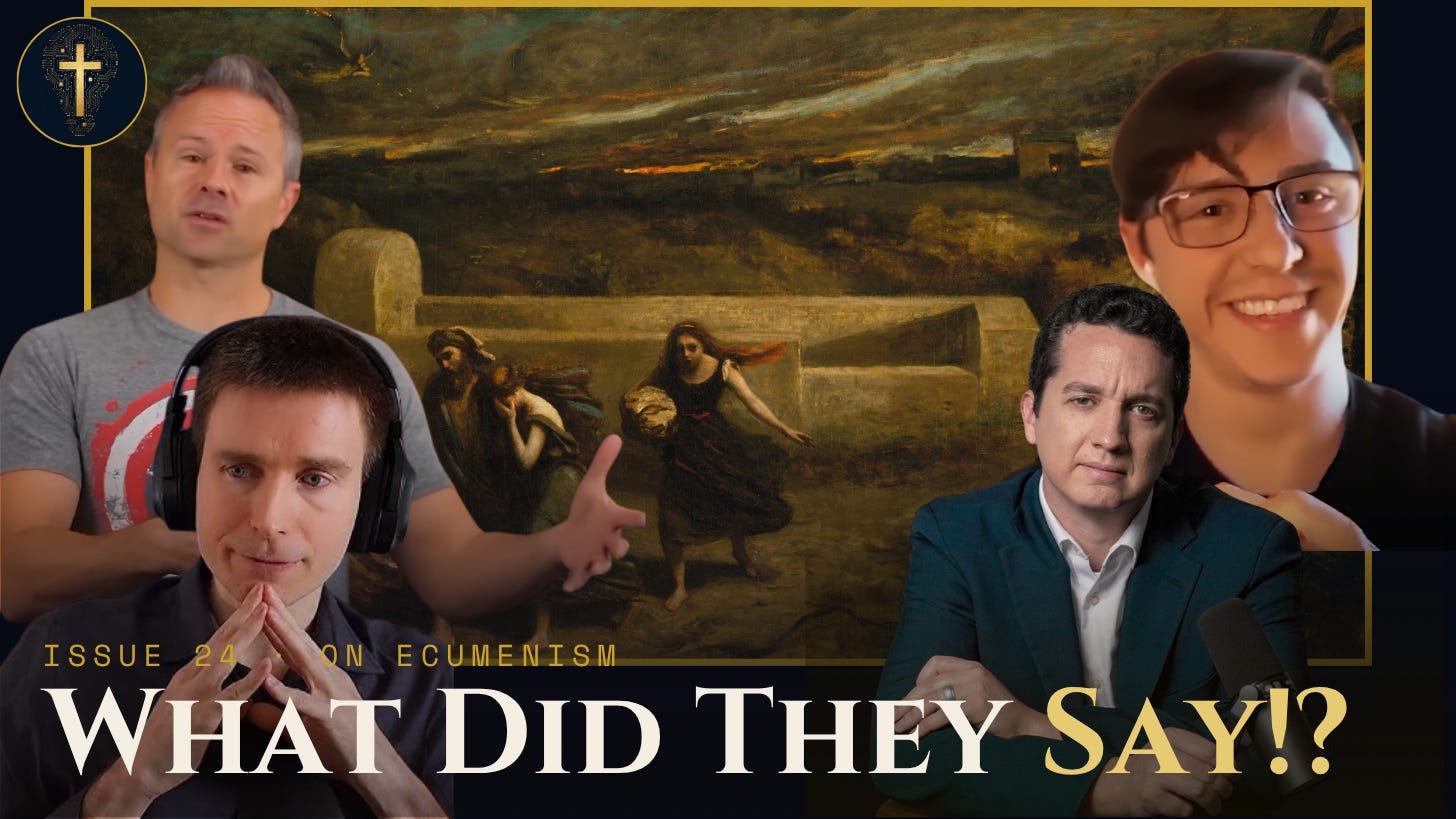
Do Protestants and Catholics Live the Same Way?
Catherine of Siena had a deep love for sinners and those fallen away from the Church. She also had little doubt about who was on their way to hell and who was not. One thing Protestants and Catholics can agree on is that if you don’t know who Jesus is, you might get into heaven on an exception, but your chances are a lot higher if you have the chance to put your faith in Him.
Another saint is St. Brigette of Sweden, who, prior to St. Catharine, attempted to get multiple Popes to return to Rome, rather than remain in Avignon out of fear. These two saints were very loving and firm in their preaching; they were even willing to warn Popes about the consequences of sin and the risk of eternal separation.
But since coming into the Church, I can assure you that apparent inconsistencies and heavily nuanced arguments around Catholic-Protestant beliefs are some of the big reasons many Catholics don’t evangelize, and why many Protestants presume that there is no salvific reason to consider Catholicism. The former thinks they need to be some scholar to tell someone they should be Catholic, while the latter looks at the scholars and says, “They told me to just follow my conscience; I guess I’m alright.”
For example, Trent Horn will say that Protestants and Catholics basically live their moral lives the same way. He proposes the idea that if we were to set up security cameras and spy on a devout Catholic and a devout Protestant, we would probably find that they live their lives the same way.
Trent Horn is a favorite apologist of mine. If you know a little about my story, you know his books are excellent, and I continue to recommend them. But his approach to evangelism reminds me of what evangelicals would call “seeker-friendly” evangelism. That is, downplaying the consequences of rejecting Christianity in favor of emphasizing its truth, goodness, and beauty. On the surface, there is nothing wrong with this approach, but it can sometimes be overused.
For example, Trent has said that Protestants and Catholics basically live their moral lives the same way. He proposes the idea that if we were to set up security cameras and spy on a devout Catholic and a devout Protestant, we would probably find that they live their lives the same way.
WATCH:1
In many areas, this is true: prayer, devotions, going to Church, etc. But in morality, I don’t think we can say that Protestants and Catholics teach or live the same way. As a Protestant, I would have denied this. But now, as a Catholic, I have to say that modern Protestantism has produced some of the worst and morally questionable books on marital relations in a Christian context. Even many evangelical pastors and influencers are preaching that sins like masturbation, oral sex, and even the more extreme forms of sodomy are considered licit in the Christian marital chamber.
I knew that these things were affirmed in some circles of Protestantism because one of my textbooks for ethics affirmed some of them. But I assumed it was only fringe groups. When I became Catholic, I started listening to Trent Horn’s channel even more (I highly recommend it) and was shocked to find out how prevalent the belief is that “consent” is the only criterion for whether or not something is morally licit in marital intimacy.
DISCLAIMER: The following videos for this segment get into sexual ethics and marriage. If you have kids in the room, don’t play videos that say “WATCH: LANGUAGE WARNING”2
Here is a clip where Trent explains that, according to the Catholic Church, masturbation is a grave sin, but he has a problem with the fact that many Protestants condone this activity within the marriage bed.
WATCH: LANGUAGE WARNING:
Trent argues that these Protestants are leading people into sin. But just a moment ago, we saw that Trent made the case to Allie that Protestants and Catholics basically live their life the same. So which is it? Can Protestants commit these sins of masturbation without risk to their soul, or does Protestant theology lead to some pretty insane moral frameworks?
In the next clip, Trent demonstrates that Protestants are willing to go even further on the topic of sodomy within the marriage bed.
WATCH: LANGUAGE WARNING:
I won’t post another video on this topic, but even in Trent’s most recent debate with Ryan from NeedGod.Net, this topic of sodomy between married couples came up in the context of eternal security and salvation. Trent was arguing that people could lose their salvation by committing these actions, and the Protestant, Ryan, would not concede the point that Christians would be risking their salvation in doing so. Even from a Calvinist perspective, you could at least say “They were never saved to begin with.” Still, Ryan would not concede. Wild….
For the record, Trent crushed it. There is a link in the footnotes. It is easily one of the best debates I’ve seen on Eternal Security and why it is so dangerous. You can find the full debate in the footnotes.3
At the end of this debate, it seemed clear to me that Trent was scandalized by the brazen attitude that Christians could commit murder and sexual immorality, with no eternal consequence. Considering that the Church condemns these as grave sins, it was obvious that, to Trent, the reason this debate was important was because of the potential damnation souls might experience; assuming Catholicism is true, Ryan would be leading and encouraging people to go to hell.
In reality, those outside the Church not only don’t have the sacraments, but they also don’t have the teachings of the Church to protect them from committing acts of grave sin. The gravity of the sin is the first precondition to a mortal sin — sin that, if unrepented of, will lead to damnation. Some Protestants want to bet their salvation that there is no way one could lose their salvation, but this, ironically, is not a safe bet since that doctrine is held by a very small and novel minority.
But if, according to Trent Horn, Protestants and Catholics basically live the same life morally and believe the same truths, then why is he warning Protestants about prominent figures in evangelicalism promoting grave sins? I suspect it is because he believes that these Protestants, being outside the Church, are more prone to the fires of hell since they are promoting and engaging in sins that the Church considers eligible for mortal sin.
But I don’t think these contexts would be as confusing if Trent had never taken the step of endorsing Protestants who actually teach heresies that lead to immoral frameworks and a rejection of the Church. But when we present individuals that preach against our denomination and its teachings as contrary to scripture and the gospel, and then turn around and say those preachers’ teachings are dangerous, it can feel like Catholics don’t actually know what they believe or are just unwilling to give a straightforward, common-sense answer.
— DR
Thanks for reading. This excerpt came from the long-form article: Can We Go Too Far With Ecumenicism? In it, I discuss how presenting anti-Catholic influencers as preaching the same teachings as Catholic ones only leads to apathy on the Catholic side and confusion on the Protestant side. Enjoy.
Can We Go Too Far With Ecumenism?

Disclaimer: The previous email said this was paid. It’s not paid; it’s a free post! Enjoy.
Clip came from Allie Beth Stuckey’s Relatable podcast between her and Trent.
The following clips were taken from “Why Some Christians Have a ‘Sex Problem’.”
Debate: Can a Christian Lose Their Salvation?
What do you think? I know there are Protestants that disagree with the Protestants in these videos. How do you think Protestants can get back on the same page on these ethical issues.
Thanks for reading! Don't forget to hit the like button (❤️)
Baptist, here. Isn't one of the conditions for a sin to be mortal is knowledge that it's a sin? If so, would that give some leeway to a Christian who was taught that something like masterbation was okay in certain circumstances?
Regardless, I appreciate the moral clarity the Catholic Church provides on sexual matters and in other areas, and wish more churches were like that.